Did you know that archaeologists once found 1,000-year-old yerba mate leaves tucked inside a Quechua tomb near Lima, proof that this beverage was being shared long before any Spanish ship reached South American shores? That single discovery tells us so much about the cultural evolution of the Guaraní yerba mate ritual, a story that stretches from ancient ceremonial circles to the coffee shops and kitchens of 2026.
¡Hola! Welcome. We're glad you're here.
At Allpa Foods, we love telling the origin story behind every ingredient we sell, and yerba mate has one of the richest stories of all. Grab your gourd (or a mug, no judgment!) and let's dig into it together.
Key Takeaways
| Question | Quick Answer |
|---|---|
| What is yerba mate? | A caffeinated herbal tea made from the dried leaves of the Ilex paraguariensis plant, traditionally shared in a communal ritual by the Guaraní people. |
| Where did the yerba mate ritual originate? | With the Guaraní and Kaingang peoples of what is now Paraguay, Brazil, and Argentina, well before European contact in 1537. |
| How is yerba mate traditionally consumed? | Steeped in a shared gourd (also called a "mate") and sipped through a metal straw called a bombilla, passed hand to hand. |
| Which country drinks the most yerba mate? | Uruguay, where the average person drinks between 6 and 8 kg of yerba mate every single year. |
| Is yerba mate an energy drink? | It's a natural energy drink alternative, offering sustained energy from natural caffeine without the crash of sugary energy drinks. |
| Where can I try it today? | Right here! Try our Allpa Paraguayan Yerba Mate 6oz for $10.99. |
| Does the ritual still matter in 2026? | Absolutely. The cultural evolution of the Guaraní yerba mate ritual continues today, with millions still sharing the drink communally while a global market builds around it. |
What Is Yerba Mate? The Guaraní Origins Behind the Ritual
So, what is yerba mate exactly? It's a leaf. It's a tea. It's a beverage. But really, it's a whole lot more than that.
Yerba mate comes from the leaves of the Ilex paraguariensis tree, a plant native to the subtropical forests shared by modern-day Paraguay, southern Brazil, northern Argentina, and Uruguay. Long before it was a "mate drink" you could buy in a shop, it was a sacred plant used by the Guaraní people in ceremonies, gatherings, and everyday life.
The Guaraní called it "ka'a," which simply means "herb." They believed it carried the strength of the forest itself.
Sharing yerba mate wasn't a solo activity. It was communal, passed from person to person in a single gourd with a single straw, a ritual meant to build trust and connection between everyone in the circle.
The Cultural Evolution of the Guaraní Yerba Mate Ritual Through Colonization
In 1537, Spanish colonizers made first contact with the Cario-Guaraní people in what would become Asunción. That moment changed everything for this "ka'a" leaf.
Jesuit missionaries arrived not long after and did something interesting: instead of banning the drink (which they initially tried!), they eventually began cultivating yerba mate on a large scale in mission plantations known as reducciones. This is a huge turning point in the cultural evolution of the Guaraní yerba mate ritual, because it shifted the plant from a wild-harvested sacred herb into a cultivated cash crop.
The ritual didn't disappear though. It adapted. Spanish settlers picked up the habit of drinking mate from the Guaraní themselves, and the shared-gourd tradition spread across the region.
The war didn't just cost Paraguay its people, it cost the nation control of its own sacred plant.
Things took a darker turn in the late 1800s. The War of the Triple Alliance devastated Paraguay so badly that the country was forced to sell off its yerba mate plantations to foreign companies just to cover war debts.
One Anglo-Argentine company, LIPSA, ended up acquiring 2,647,727 hectares of land in eastern Paraguay by 1886. That's roughly 17% of the entire region, owned by a single company for yerba mate production.
It's a tough chapter. But it's also part of the honest, full story we like to tell here, because understanding where things came from helps you appreciate the mate drink in your cup today even more.
From Sacred Circle to Everyday Mate Tea: How the Ritual Spread
By the 20th century, yerba mate had traveled far beyond its Guaraní roots. It became a staple across Argentina, Uruguay, Paraguay, southern Brazil, and even parts of Syria and Lebanon, carried there by immigrant communities.
The ritual itself stayed remarkably intact, though. Even today:
- ONE: Yerba mate is prepared in a shared gourd, not individual cups.
- TWO: A single bombilla (metal straw) is passed around the group.
- THREE: The person pouring the hot water, called the "cebador," refills the gourd for each person in turn.
- FOUR: Saying "gracias" while handing back the gourd traditionally means "no more for me, thanks!"
This is what makes yerba mate tea so different from grabbing a to-go coffee. It's built for connection, not just caffeine.
The Cultural Evolution of the Guaraní Yerba Mate Ritual in Modern South America
Fast forward to 2026, and the mate drink is everywhere, but the ritual hasn't lost its meaning. In Argentina, it's common to see friends passing a gourd on park benches, in offices, even during long bus rides.
Argentina alone now produces more than 50% of the entire world's supply of yerba mate. That's a staggering share for one country to hold.
Uruguay takes it even further on a per-person basis. The average Uruguayan drinks between 6 and 8 kg of yerba mate every year, the highest per capita consumption anywhere on the planet.
That's not a "health nut" habit. That's a national identity built around a shared cup, or in this case, a shared gourd.
Yerba Mate Tea vs Mate Drink: Understanding the Difference
People search for "yerba mate" and "mate tea" and "mate drink" like they're three different things. They're not! Let's clear that up.
| Term | What It Means |
|---|---|
| Yerba mate | The plant and the dried, cut leaf product itself. |
| Mate tea / mate herbal tea | The brewed beverage made from yerba mate leaves. |
| Mate drink | Another everyday name for the finished, brewed beverage. |
| Yerba mate loose leaf | The traditional form of the product, ready to steep in a gourd or French press. |
So whether you say "yerba mate," "mate tea," or just "mate," you're talking about the same wholesome tradition. The words shift, but the ritual stays the same.
Allpa Paraguayan Yerba Mate 6oz: Bringing the Ritual to Your Cup
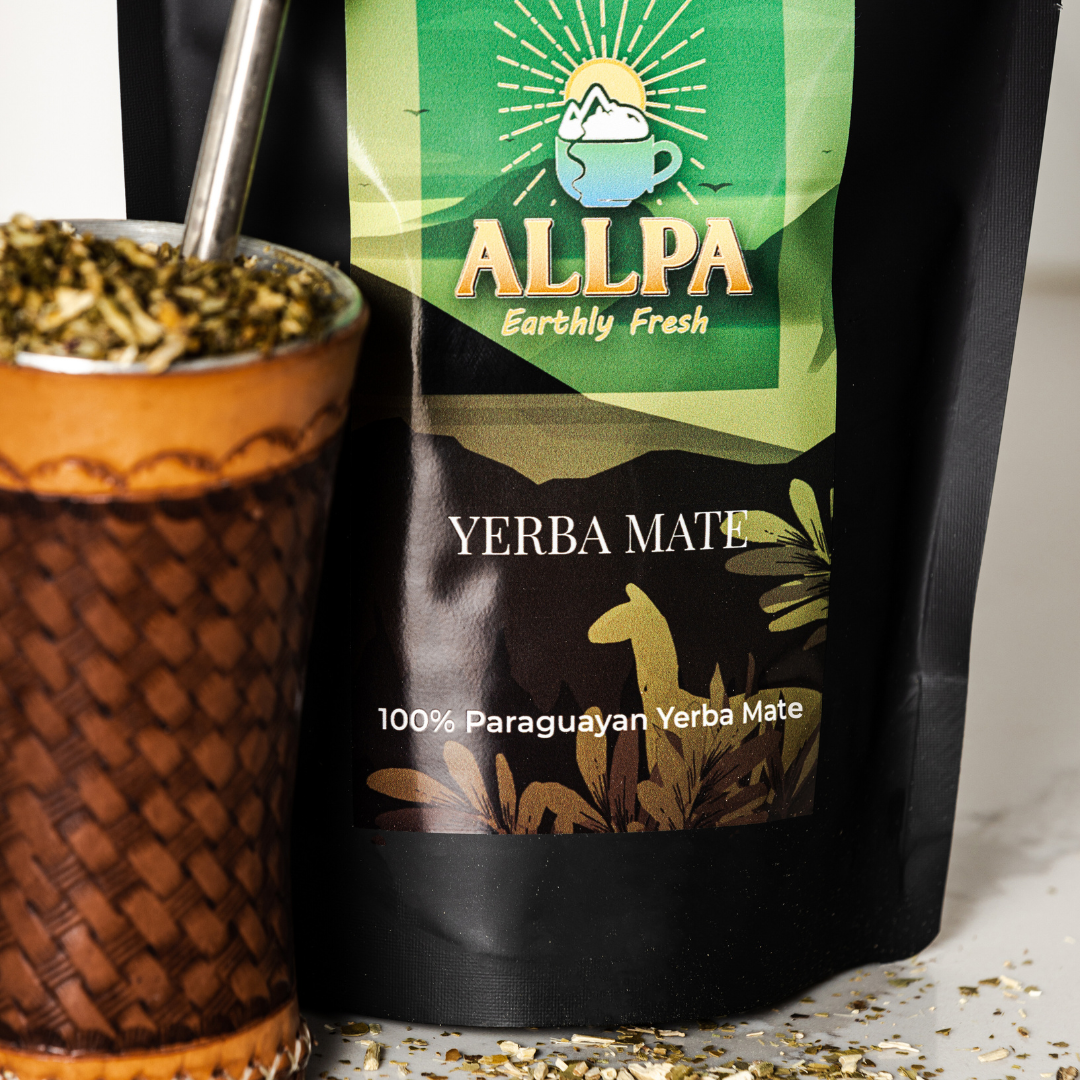
We source our Allpa Paraguayan Yerba Mate 6oz straight from the lush lands of Paraguay, the very region where this whole ritual began. It's $10.99 for pure, all-natural yerba mate, packed with antioxidants, vitamins, and minerals.
You can enjoy it hot, cold, or as part of your own daily wellness ritual. It's like a secret ingredient that makes your morning routine a bit healthier and more exciting!
Every scoop connects you to a tradition that's over a thousand years old. Pretty cool, right?
You'll find it alongside other traditional favorites in our Tea collection, where South American culinary culture takes center stage.
Yerba Mate as an Energy Drink: The Cultural Evolution Continues
Here's where the story gets really interesting for 2026. Yerba mate has quietly become one of the biggest natural alternatives to sugary energy drinks on the market.
Why? Because the caffeine in yerba mate (sometimes called "mateine" by fans of the drink) tends to deliver sustained energy without the jittery crash. That's a big reason "yerba mate energy drink" and "energy drink mate" have become such common searches.
The market numbers back this up too. The global yerba mate trade generated an $80 million U.S. dollar surplus for Latin America in 2022 alone, showing this isn't just a niche ritual anymore. It's a real economic force.
By 2026, the powder form of yerba mate is expected to hold nearly 49.3% of the market, thanks to how easy it is to blend into smoothies and energy shots. And hypermarkets and supermarkets are projected to handle over 33.7% of yerba mate distribution this year, meaning it's landing on more grocery shelves than ever.
How to Brew Your Own Yerba Mate Ritual at Home
Want to try the ritual yourself? You don't need a fancy setup, though a traditional gourd and bombilla make it more fun!
- ONE: Fill your gourd (or mug) about two-thirds full with loose leaf yerba mate.
- TWO: Tilt the gourd on its side so the leaves settle to one edge.
- THREE: Pour warm water, not boiling, over the dry side of the leaves.
- FOUR: Insert your bombilla into the wet side and sip slowly.
- FIVE: Refill with hot water as needed. The same leaves can be used for hours!
We recommend not using fully boiling water. It scorches the leaves and mutes that rich, earthy flavor yerba mate is known for.
Try it solo, or better yet, invite a friend over and pass the gourd back and forth. That's the ritual doing exactly what it was designed to do over a thousand years ago.
Pairing Yerba Mate with Other Peruvian and South American Superfoods
Once you've got your mate ritual going, why not build out the rest of your pantry with other ancient ingredients? We think of our whole shop as a Learning Hub for this kind of thing.
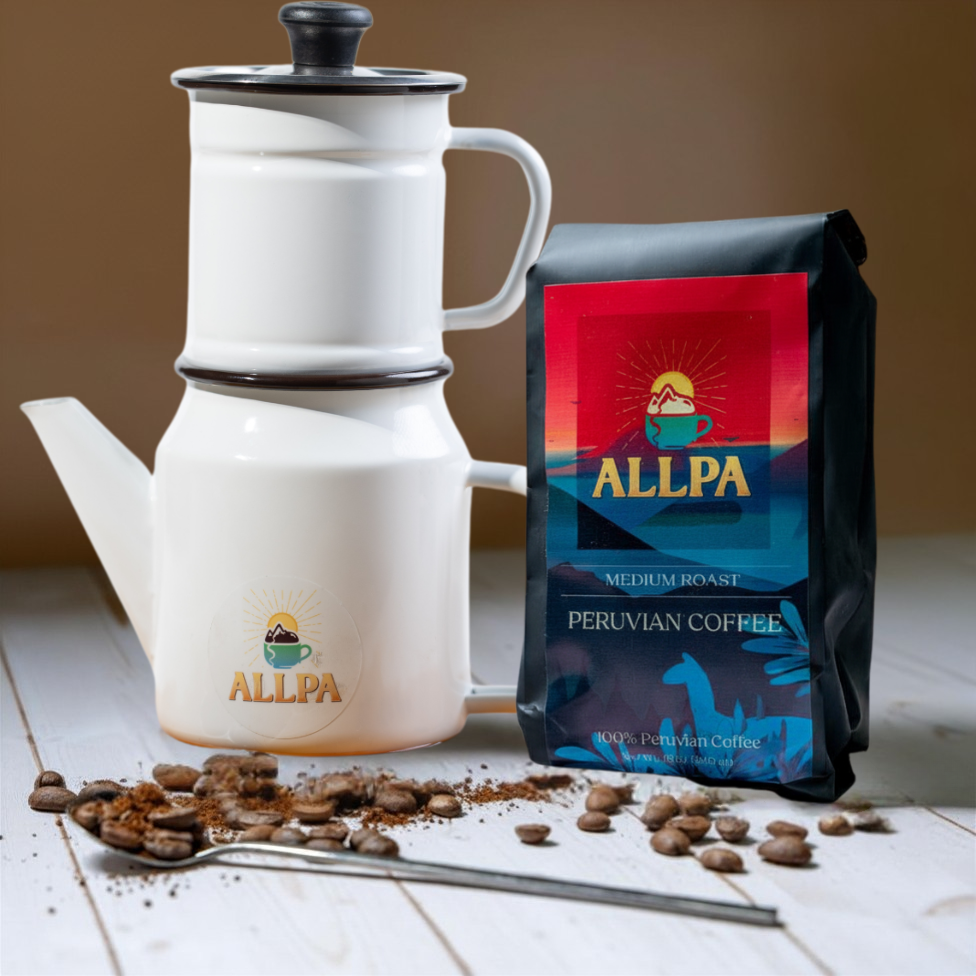
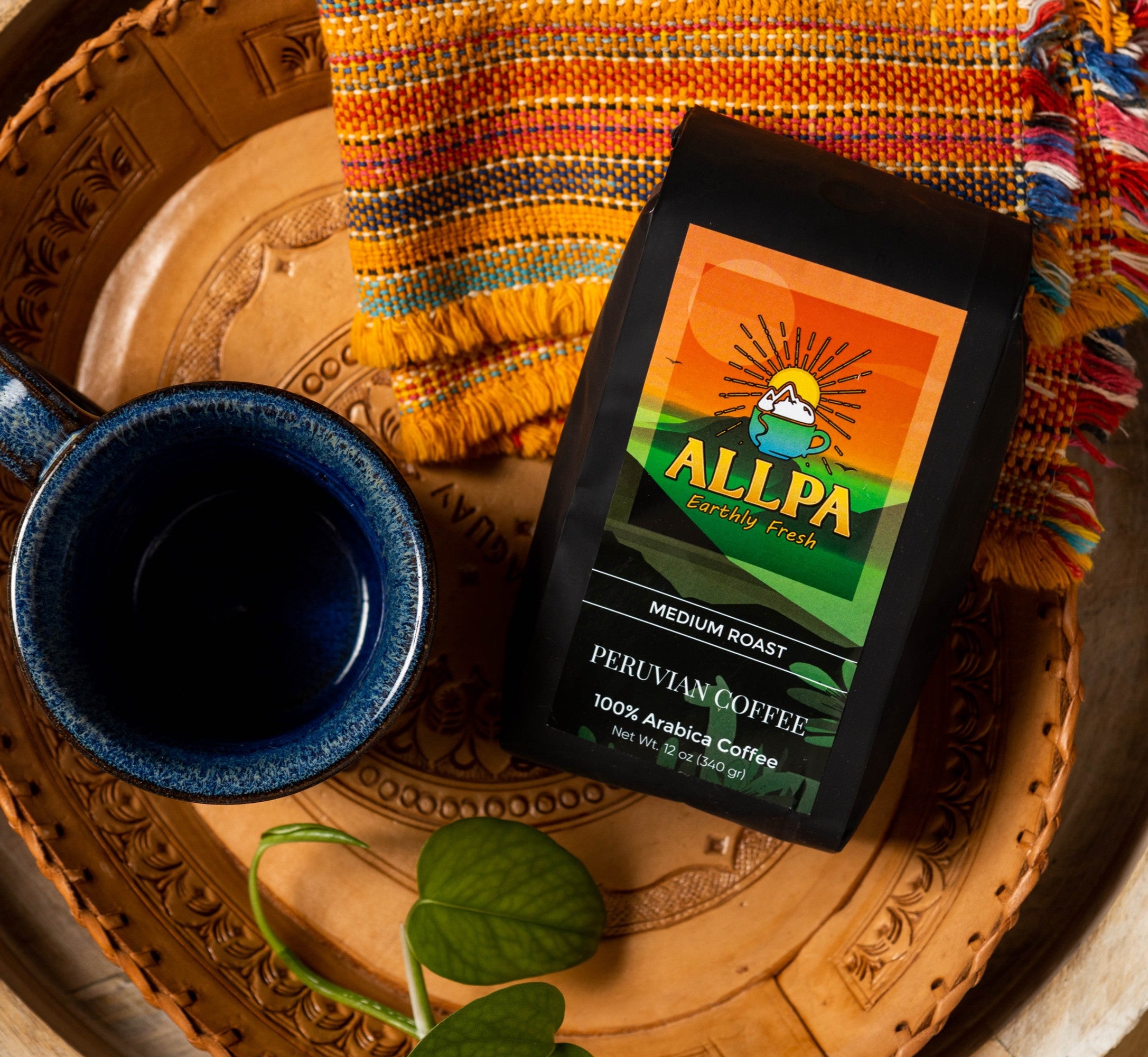
If mate isn't your only ritual drink, check out our Peruvian Coffee Experience Bundle, which pairs single-origin Cajamarca coffee with a traditional Gota a Gota brewer. Like yerba mate, Peruvian coffee is a bit of a hidden gem, very rich in flavor but still under-represented to specialty coffee lovers everywhere.
Want to stir something extra into your mate or coffee routine? A spoonful of our Peruvian Cacao Powder brings warmth and depth. A scoop of Maca Root Powder adds even more of that natural, sustained energy the Andean people have relied on for generations. And if you like your rituals a little sweet, our Lucuma Powder is a nutrient powerhouse worth blending in.
We felt these ancient ingredients from across South America deserve to be celebrated together, not kept in separate boxes. Our aim is to change how people think about "exotic" pantry staples, one cup at a time.
Why the Ritual Still Matters: Our Mission at Allpa Foods
At Allpa Foods our mission is to provide wholesome and natural food products that tell a cultural story. Yerba mate is one of the clearest examples of that mission in action.
By choosing yerba mate that's sourced responsibly, you're supporting the same farming communities who have kept this ritual alive for over a thousand years, through colonization, through war, through market consolidation, and now into the modern wellness boom. It's genuinely one of the ways we build economic bridges between small growers and your kitchen table.
You can read more about that mission on our Our Mission page, and check out Why Us if you want the full picture of how we choose our partners.
The cultural evolution of yerba mate has culminated in a booming global industry.
Conclusion
The cultural evolution of the Guaraní yerba mate ritual is really a story about survival. It survived colonization, it survived a devastating war, and it survived the pressures of a global market, all while keeping its core act of sharing a gourd between friends fully intact.
That's rare. Most ancient traditions get watered down by the time they hit a store shelf. Yerba mate never did.
Peru, Paraguay, and the whole South American region are rich and diverse in healthy, wholesome, and meaningful food traditions. Try some today, starting with a gourd of our Allpa Paraguayan Yerba Mate, and become part of the next chapter of this thousand-year-old ritual yourself.
Frequently Asked Questions
What is yerba mate and why is it called a ritual?
Yerba mate is a caffeinated herbal tea made from the Ilex paraguariensis plant, and it's called a ritual because the Guaraní people traditionally shared it from a single gourd with a single straw, passed person to person. That communal act, not just the drink itself, is what people mean by the yerba mate ritual.
Is yerba mate the same as regular tea?
Not quite. Mate herbal tea comes from a completely different plant than green or black tea, and it's brewed and shared in a very different way, traditionally through a bombilla straw rather than a teabag.
Why do people call yerba mate an energy drink?
Yerba mate contains natural caffeine that many drinkers say provides steadier energy than coffee or sugary energy drinks, which is why "yerba mate energy drink" has become such a popular search in 2026. It's a natural alternative for anyone wanting a boost without the crash.
Which country drinks the most yerba mate today?
Uruguay holds the record, with the average person there consuming 6 to 8 kg of yerba mate per year. Argentina produces the most, supplying more than 50% of the world's yerba mate.
Is yerba mate loose leaf better than mate powder?
Loose leaf yerba mate is the traditional form used for the classic gourd-and-bombilla ritual, while mate powder is prized for convenience in smoothies and quick brews. Both come from the same plant, so it really comes down to how you want to enjoy your mate drink.
Is yerba mate worth trying in 2026?
Yes, especially with the growing global interest in the cultural evolution of the Guaraní yerba mate ritual and the natural energy benefits people are searching for right now. A 6oz bag like our Allpa Paraguayan Yerba Mate is an easy, affordable way to start.
How do you pronounce and spell "yerba mate" correctly?
It's pronounced "YER-bah MAH-tay," and while you'll see it typed online as "yerba máte," "yaber mate," or even just "mate tea," the correct spelling is yerba mate. All these variations point back to the same traditional South American drink.