
In 2026, one of the biggest “wait, what?” moments for new yerba mate tea drinkers is realizing that the flavor you love, the smoky depth you can’t miss, is not added afterward. It’s built into the drying stage, and it can involve 12 hours up to three days of wood smoke exposure to get that classic Paraguayan barbacuá profile.
Key Takeaways
| Quick Answer | What It Means for Your Cup |
|---|---|
| Smoky drying is the flavor blueprint | It shapes the taste early, so the yerba mate beverage stays bold from the first pour to the last infusion. |
| Temperature control matters | Paraguayan methods typically rely on a drying heat window around 60 to 70 degrees Celsius to develop character safely. |
| Smoke is not “optional” | Without it, you get a different style. With it, you get that “smoked yerba mate” identity. |
| It’s a traditional origin story | The Paraguayan barbacuá-style processing is part of the cultural story behind yerba mate. |
| You can brew it hot or cold | Whether you drink it as mate tea, an energy drink mate-style cold brew, or “tea and mate” vibes, the smoke carries. |
- Learn the difference: smoky vs unsmoked styles explain why “yer a mate” can taste so different from one bag to another.
- Try the real thing: Our Allpa Paraguayan Yerba Mate 6oz is made with traditional Paraguayan, smoky barbacuá-style processing.
- Browse the ritual: Explore our Allpa Tea collection when you want yerba mate tea alongside other caffeinated and herbal blends.
- Pair it like locals: Yerba mate beverage + cacao and other Peruvian pantry favorites is a familiar combo in our Learning Hub.
- In 2026, people want clarity: They’re asking what is yerba mate, how it’s made, and why the smoky version is a different experience.
Welcome! It is so nice to see you. ¡Bienvenido! Es muy agradable verte. At Allpa Foods, our mission is to provide wholesome and natural food products that tell a cultural story.
What “Yerba Mate” Really Is (and Why Drying Changes Everything)
Yerba mate (also written as mate yerba mate, yer a mate, or even yerba mate yerba mate in casual searches) is a traditional South American tea made from the leaves of Ilex paraguariensis. People drink it as yerba mate tea, a mate drink, or a daily yerba mate tea drink ritual, usually through a gourd and straw, or as a steeped beverage.
But here’s the key point for Why Paraguayan Yerba Mate Requires a Smoky Drying Process: the drying method is not just a manufacturing detail. It’s where the flavor identity is set. When you taste smoky Paraguayan yerba mate, you’re tasting the results of how the leaves were dried and smoked, not just the leaf itself.
Even the phrase “yerba mate what is it?” often leads to the same realization. Different styles exist, and style starts with processing. Smoky versions carry a deeper, toasted, and wood-influenced profile that you cannot fully replicate by “adding smoke” later.
We like to think of it like this, simply. If the drying stage is the heartbeat, the smoke is the rhythm.
Why Paraguayan Yerba Mate Requires a Smoky Drying Process: Flavor Comes First
So, Why Paraguayan Yerba Mate Requires a Smoky Drying Process? Because the smoke isn’t a topping. It’s part of the leaf’s transformation. During drying, the leaves get exposed to wood smoke long enough to build that signature barbacuá character.
This is where the “smoked yerba mate” difference shows up in real life. The smoky notes keep showing up in later infusions, not just the first cup. That’s why some people love the boldness, while others prefer a milder, unsmoked mate herbal tea-style profile.
And in 2026, more drinkers are trying both. They’re comparing how each style feels in the mouth, how it changes across multiple steeping rounds, and how it behaves when you turn it into a yerba mate drink you can chill.
The Drying Stage in Detail: Temperature, Time, and Barbacuá-Style Smoke
Drying is usually described with the Spanish term secado, and for smoky Paraguayan yerba mate, the process is about building character while keeping the leaves usable and consistent.
For Why Paraguayan Yerba Mate Requires a Smoky Drying Process, two parts matter most to your cup. One is the smoke duration. The other is the drying heat window. When these are balanced, you get that toasted, smoky profile without turning the leaves harsh or flat.
What you’re really paying for when it’s smoky
- Balanced heat during secado: many smoky styles rely on a temperature range around 60 to 70 degrees Celsius to develop the right character.
- Smoke exposure that “sets” the profile: the leaves absorb wood influence while they dry, creating a stable smoky identity.
- Consistency across infusions: properly dried smoky leaves maintain flavor through repeated brews.
Here’s the fun part. That smoky taste is why people can tell the difference between “yerba mate” and “smoked yerba mate” just by smelling the dried leaves. No guessing needed.
If you want the heritage behind the process, it helps to buy from someone who describes the style clearly, not vaguely.
Allpa Paraguayan Yerba Mate: Smoky Barbacuá-Style Processing in a 6oz Pack
That’s exactly why we highlight the processing style on our product page. Our Allpa Paraguayan Yerba Mate 6oz is sourced from the lush lands of Paraguay, and we describe it as “traditional Paraguayan yerba mate with smoky Barbacuá-style processing.”
And yes, you can taste the results. In 2026, more people are looking for a yerba mate tea drink that feels like a complete experience, not an afterthought.
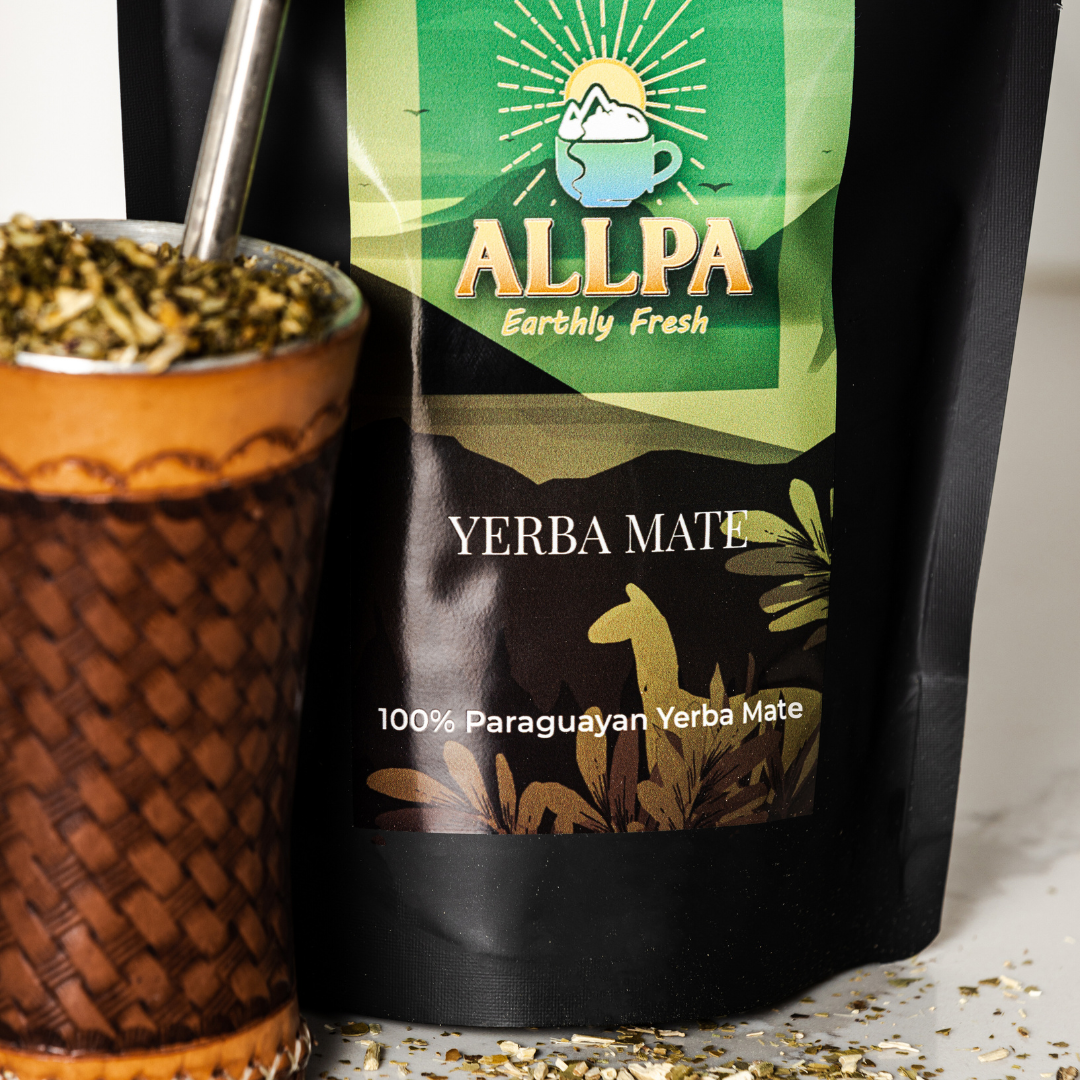
Price example: $10.99 for Allpa Paraguayan Yerba Mate 6oz.
When we say it’s smoky, we mean it. This is the kind of yerba mate that works beautifully whether you enjoy it hot, cold, or as part of a daily wellness ritual. It’s also packed with antioxidants, vitamins, and minerals, designed for mental clarity and sustained energy, the way many mate tea drinkers experience it.
It’s not just a drink, it’s a cultural story you can actually taste.
How Smoky Drying Affects Your Brewing: Hot Mate, Cold Yerba Mate, and “Energy Drink Mate” Vibes
Once the leaves are dried with smoke, your brew gets a head start. The smoky character helps the flavor feel fuller right away, which matters if you’re making a yerba mate tea drink for the day you’re actually busy.
Here are three common ways people enjoy yerba mate tea in 2026, and how smoky drying shows up in each one.
- Hot mate (traditional-style steeping): Smoky Paraguayan leaves create a deeper first cup, then keep delivering toasted notes through later pours.
- Cold yerba mate beverage (chill it, don’t dull it): Smoke holds up in cold brewing better than you might expect. You still get that “barbacuá” profile instead of a flat taste.
- Fast “energy drink mate” routine: Many people blend strong, chilled mate drink with ice for a quicker refresh. Smoky drying makes it taste more complex, even when it’s served cold.
One quick note we always keep in mind: keep your brew temperature sensible. In the wider discussion about yerba mate tea, a threshold around 65°C is often mentioned as a point where drinks can irritate the esophagus and increase health risks. That’s one reason we encourage smart brewing habits every time.
Practical tip: If you want the smoky flavor without going too hot, brew stronger and then dilute with slightly cooled water, ice, or your preferred mix.
Why This Smoky Style Is a “Best Choice” in 2026 for Many Yerba Mate Drinkers
Here’s what we’re seeing in 2026. People are more curious about process than ever before. They want to know what yerba mate loose leaf is, why one bag tastes smoky, and why another feels cleaner and greener.
Smoky Paraguayan yerba mate often wins for drinkers who like:
- Bold, toasted flavor that stays present across multiple infusions.
- A more “gritty” classic mate profile (smoky barbacuá style) rather than a delicate one.
- Versatility, because smoky drying holds up when you make a yerba mate drink for hot or cold.
And if you’re wondering whether it’s worth it, we’ll be direct. If you enjoy smoky flavors in coffee, cacao, or even roasted grains, smoky Paraguayan yerba mate is very often a good match for your palate.
That “under-explored” feeling is real for many drinkers in 2026. The market often highlights a few regions, but Paraguayan processing deserves attention, especially when you’re talking about smoky drying. It’s not a gimmick. It’s an origin story.
How to Choose Yerba Mate Tea That’s Actually Smoky (Not Just “Flavorful”)
If you’re comparing brands, you don’t need to be a tea expert. You just need to look for clear processing details and the style name people use in that region.
When you see terms that connect to smoky processing, it usually means the producer starts with wood smoke during drying. That’s what you want if you’re specifically looking for Why Paraguayan Yerba Mate Requires a Smoky Drying Process.
Use this simple checklist:
- Look for “smoky” or “smoke-cured” style language on the label or product description.
- Look for “Barbacuá-style” or a clear reference to Paraguayan smoky processing.
- Choose a brand that describes the origin, not just the flavor outcome.
- If you drink yerba mate beverage cold, look for consistency notes like “stays bold” or “works hot or cold.”
And if you want to explore beyond yerba mate, it helps to shop by what you’re pairing it with. Our Allpa Superfoods collection is a good place to browse cacao, maca, and other wholesome staples that many people enjoy alongside mate.
Conclusion: Why Paraguayan Yerba Mate Requires a Smoky Drying Process (and Why It Matters to Your Cup)
Why Paraguayan Yerba Mate Requires a Smoky Drying Process comes down to one thing, the leaves absorb smoke during drying, and that’s where the signature Paraguayan barbacuá identity is created. From temperature and time, to how the flavor holds across infusions, smoky drying is the difference between “just yerba mate tea” and the full, bold experience.
In 2026, more people are choosing drinks they can trace back to cultural methods. If you want that classic smoky depth, start with leaves that are truly smoked during processing, like our Allpa Paraguayan Yerba Mate 6oz, and brew it your way, hot, cold, or as a daily mate tea drink.
Frequently Asked Questions
Why does Paraguayan yerba mate taste smoky compared to other yerba mate teas?
Because Why Paraguayan Yerba Mate Requires a Smoky Drying Process is baked into the production, not added at the end. Smoke exposure during drying helps shape the flavor early, so yerba mate tea stays toasted and bold across multiple infusions.
How long does smoky drying take for yerba mate?
Smoked yerba mate processing can involve 12 hours up to three days of wood smoke exposure, depending on the method and desired profile. That long exposure is a big reason the smoky flavor is stable in the cup.
What is the best way to brew smoky Paraguayan yerba mate tea in 2026?
For most people, the best results come from brewing strong and keeping the serving temperature comfortable, then adjusting with cooled water or ice for a yerba mate beverage. Smoky drying helps the flavor hold up whether you drink hot mate or cold yerba mate drink.
Is smoky yerba mate an energy drink mate substitute, or does it taste different?
It can work as an energy drink mate-style routine, especially when served chilled and strong. The taste will be clearly different from sweet energy drinks, smoky and toasted from the yerba mate loose leaf itself.
Is yerba mate tea safe to drink hot?
We recommend brewing with sensible temperatures, since a threshold around 65°C is often mentioned as where drinks can irritate the esophagus and raise health risks. You still get the smoky character from Paraguayan drying without needing extremely hot sipping.
What is yerba mate what is it, and why do people search “mate herbal tea” too?
Yerba mate is a tea made from yerba mate leaves, often enjoyed as mate herbal tea by people who want a ritual similar to other teas. In reality, processing, including smoky drying, strongly affects whether your cup feels bold, toasted, or smoother.